OS
Device dashboard
Model, manufacturer, Android version and codename, security patch level and kernel version on one screen.
CPU
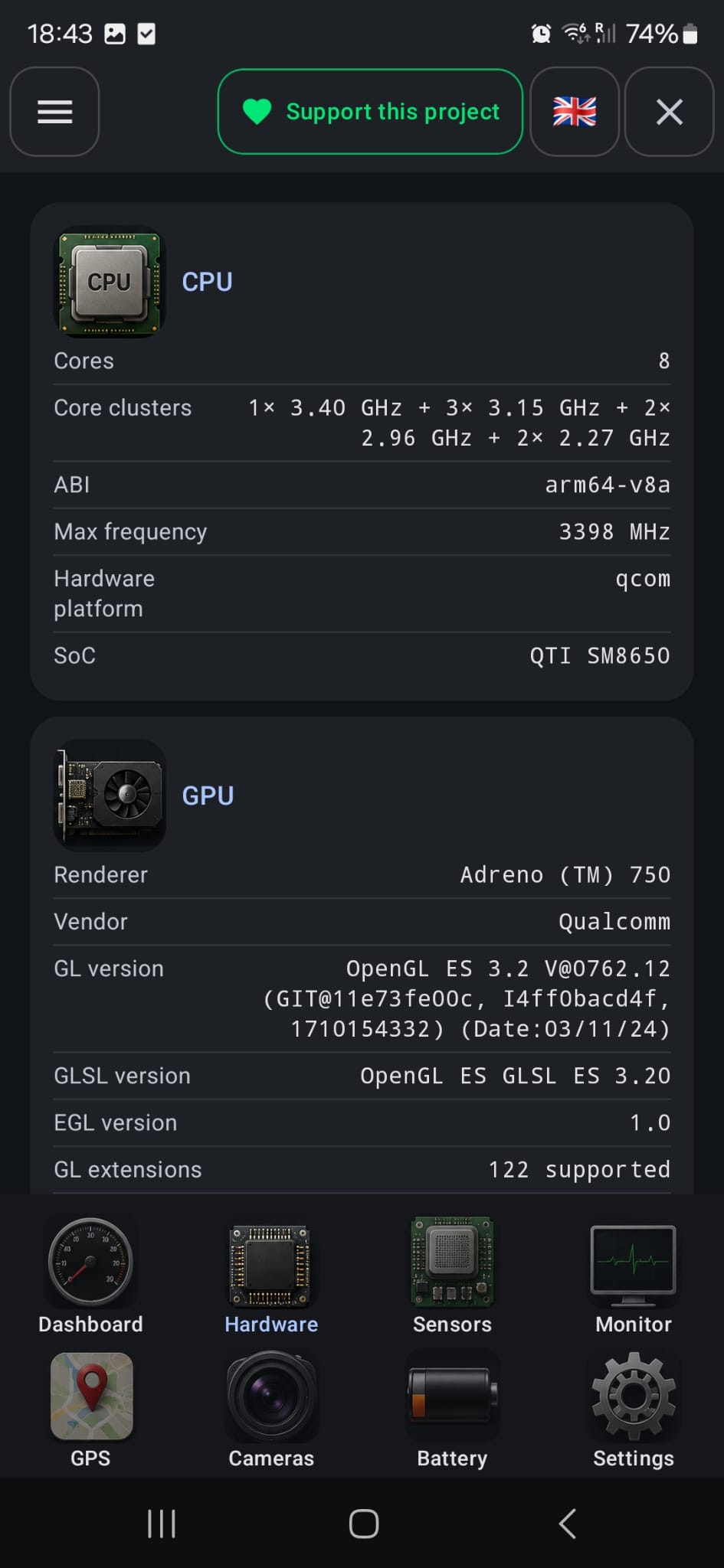
CPU & GPU
Cores, clusters and clocks, SoC and ABI, plus GPU renderer, vendor and OpenGL ES / GLSL / EGL versions.
RAM
Memory, storage & display
Memory and storage usage, plus display and audio details, in the Hardware tab.
~
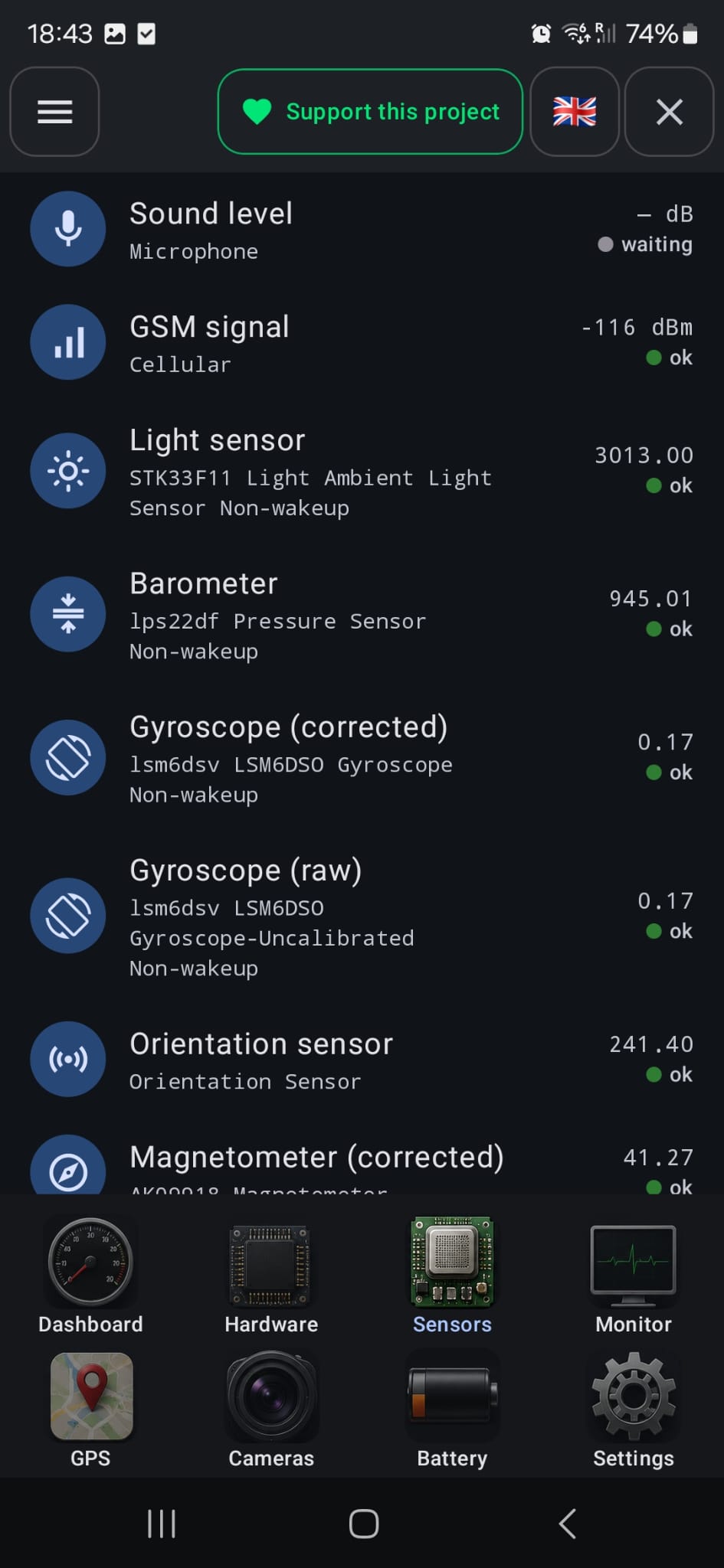
Live sensors
Every hardware sensor with its real chip name, a live value and status, at Fast, Normal or Slow sampling speed.
/s
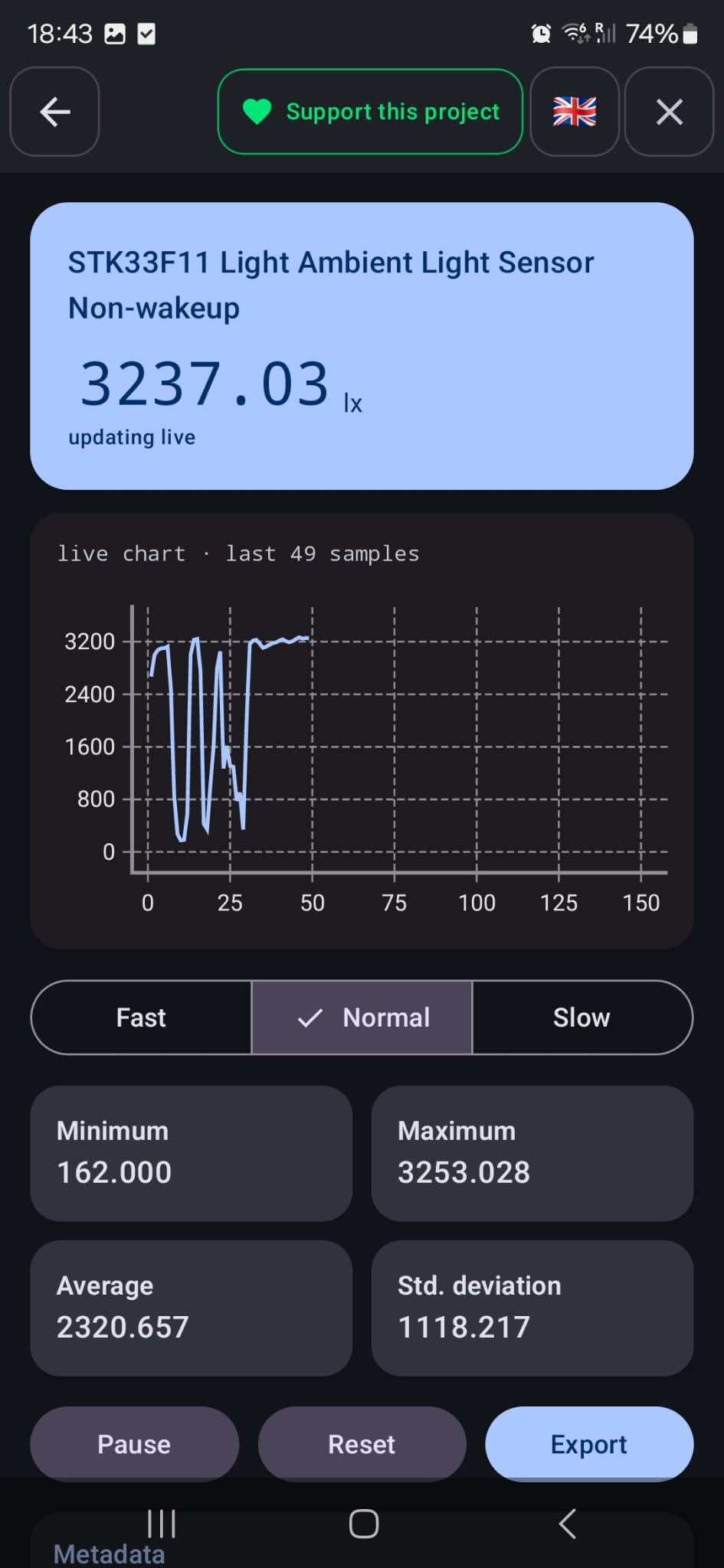
Charts & statistics
Live chart for any sensor with minimum, maximum, average and standard deviation - pause or reset any time.
REC
Monitor & recording
Pin the sensors you care about to the Monitor tab and record a session of all of them together.
CSV
Export
Export recordings to CSV, JSON, XML, TXT or GPX and share them with any app you choose.
GPS
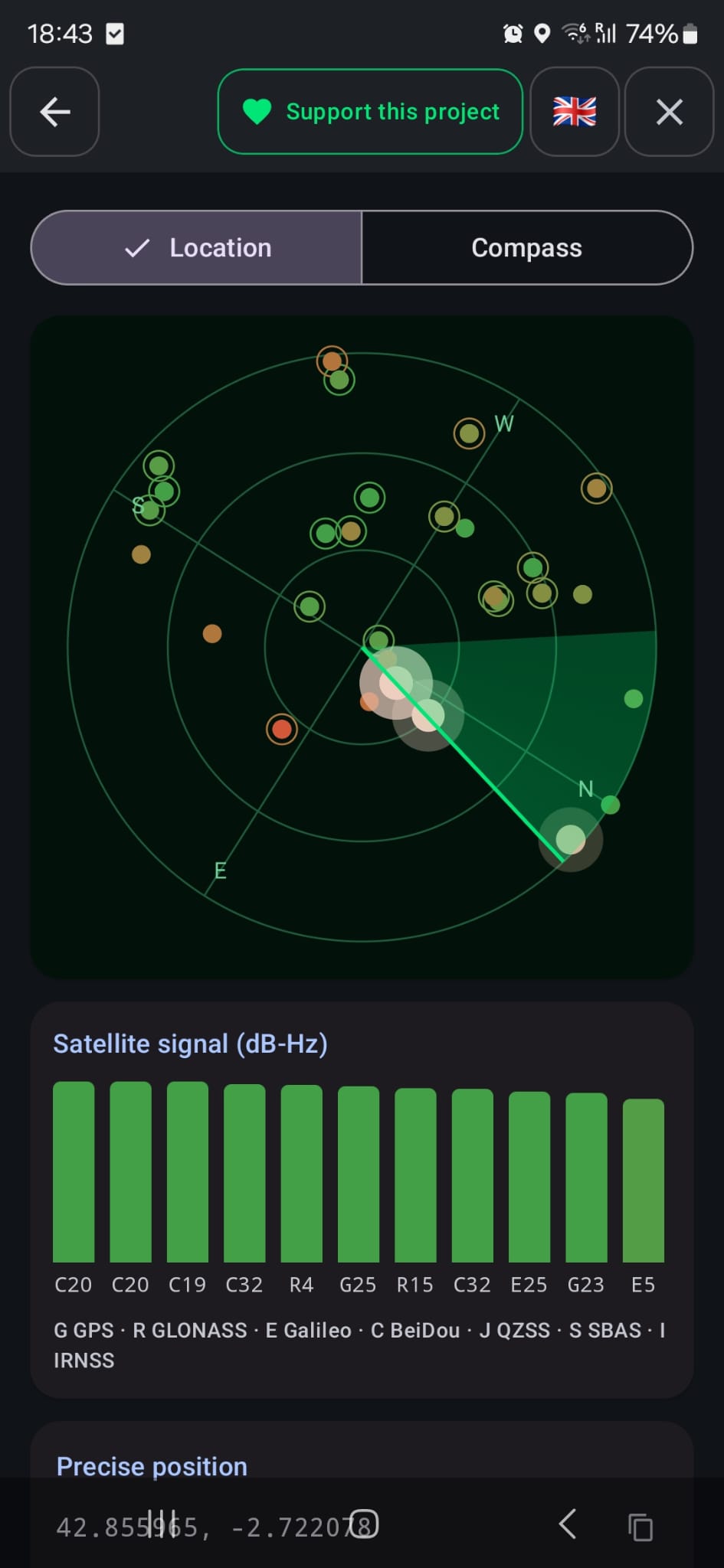
GPS & compass
Satellite radar with signal strength for GPS, GLONASS, Galileo and BeiDou, precise position, a compass with true-north correction, and GPX track recording.
CAM
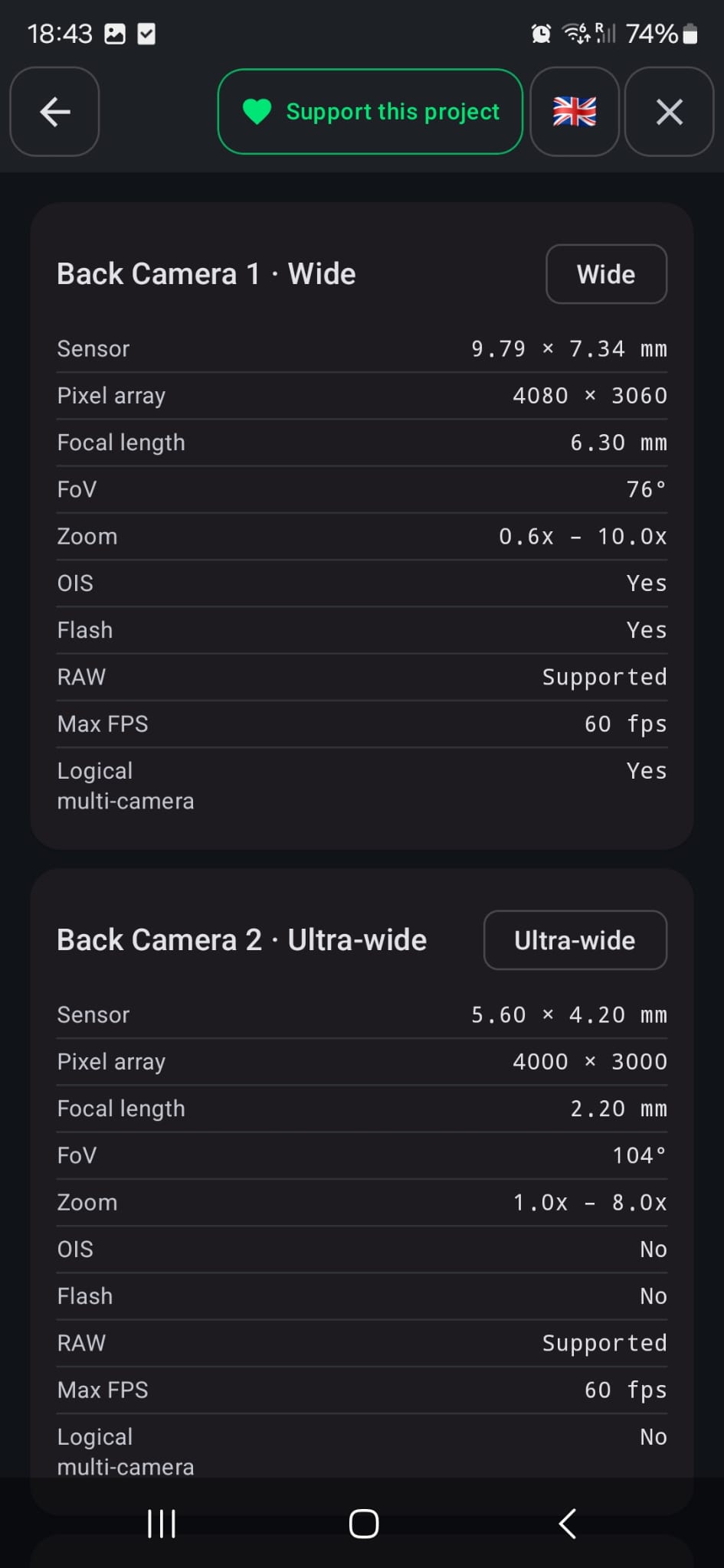
Cameras
Per-camera sensor size, resolution, focal length, field of view, zoom range, OIS, flash, RAW and max FPS.
%
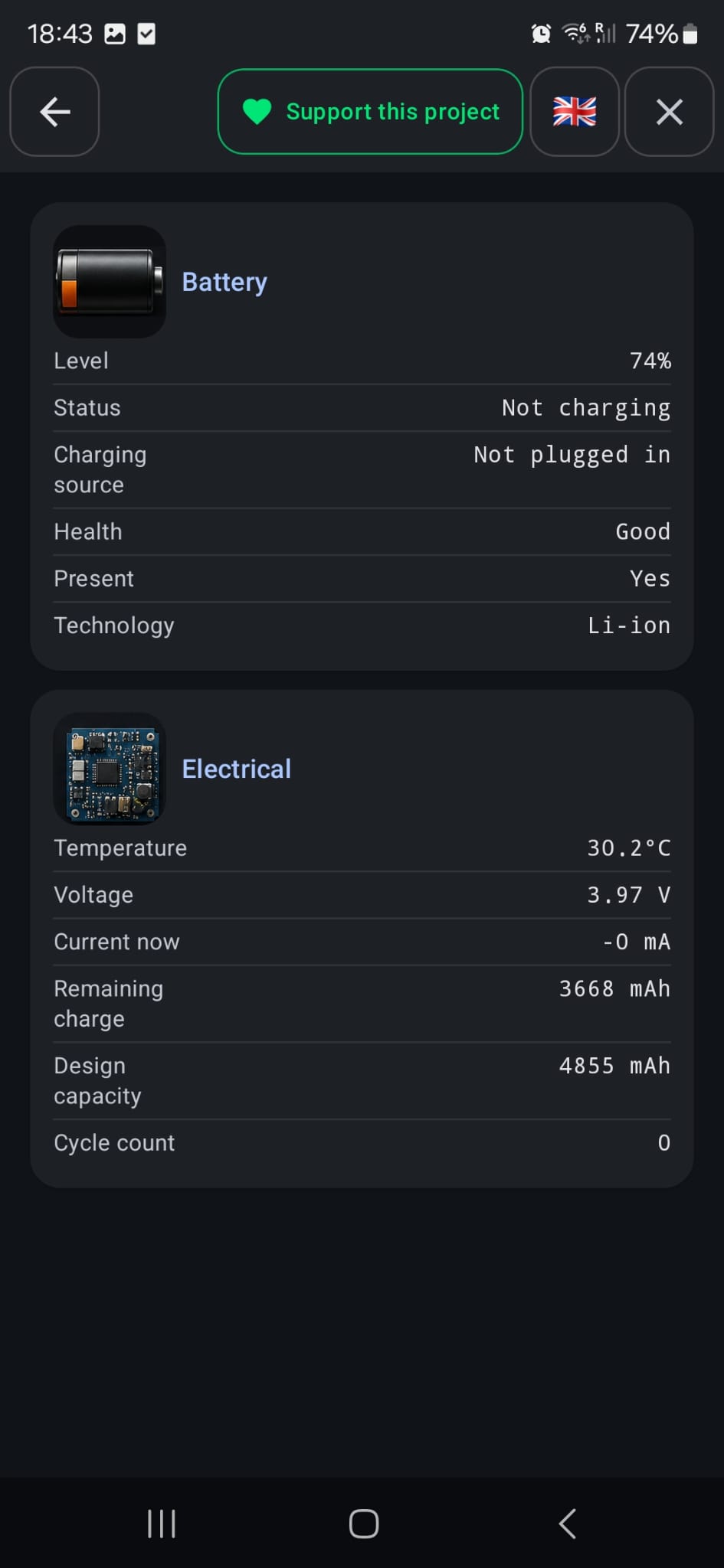
Battery
Level, health, charging source, temperature, voltage, current, remaining charge, design capacity and cycle count.
dB
Sound level & GSM signal
A microphone-based sound level meter and live cellular signal strength, each with its own detail screen.
NET
Connectivity
Wi-Fi, cellular, SIM state and network details for the connection your phone is using right now.
?
Search
Find any sensor, hardware section or setting instantly from one search box.
PL
English & Polish
Switch the app language right from the top bar, independent of your system language.
◐
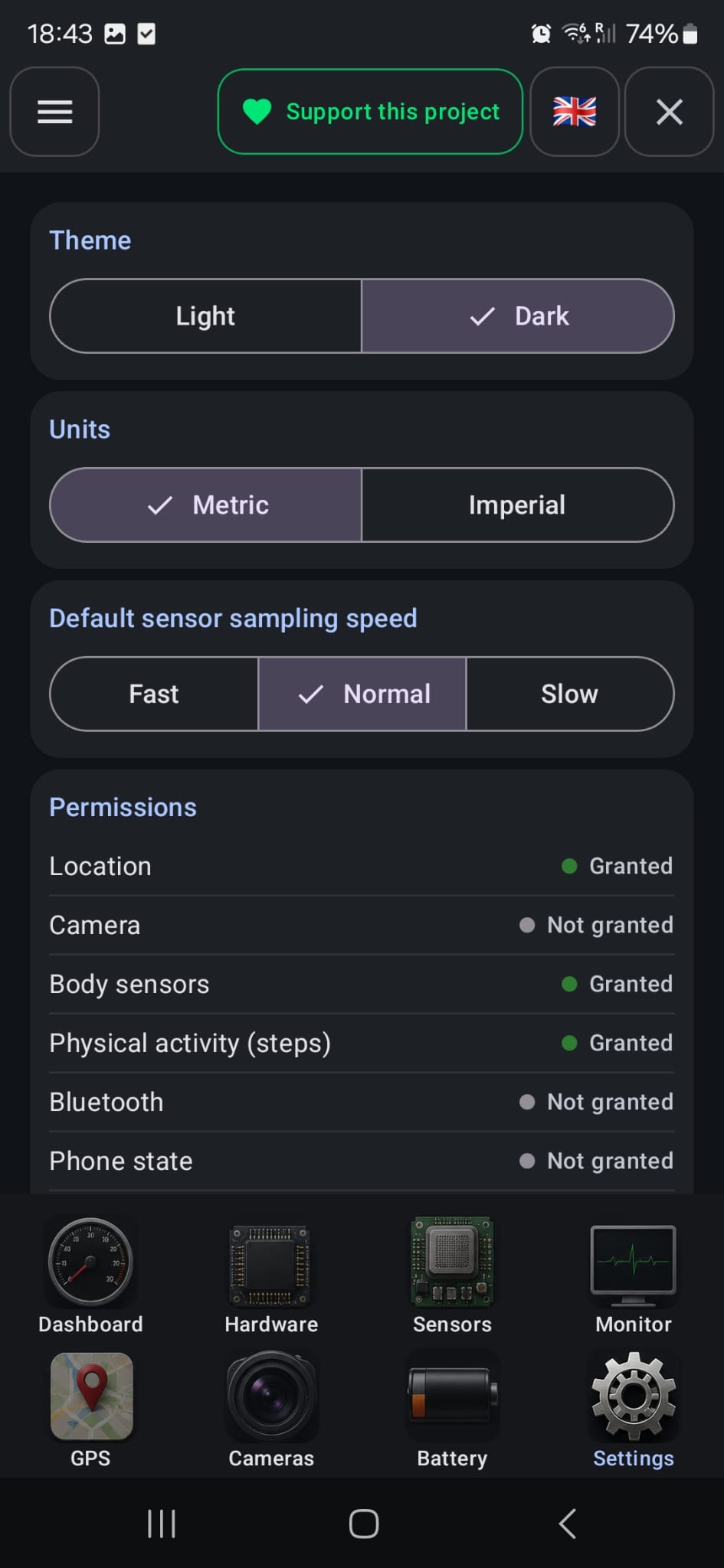
Dark & Light theme
Starts in Dark theme, switch to Light any time from the menu or Settings.
</>
Open for viewing
The full source code is published on GitHub, so you can see exactly what the app does on your phone.
 LabDroid